Architecture-Design

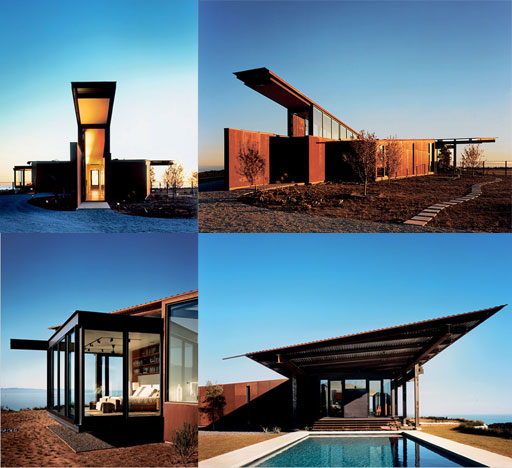
Montecito Residence

There’s something to be said for stepping outside the box, and this home by Tom Kundig certainly makes a statement. The extreme slopes and angles are pretty spectacular.

[via nytimes]

[posted by katie]

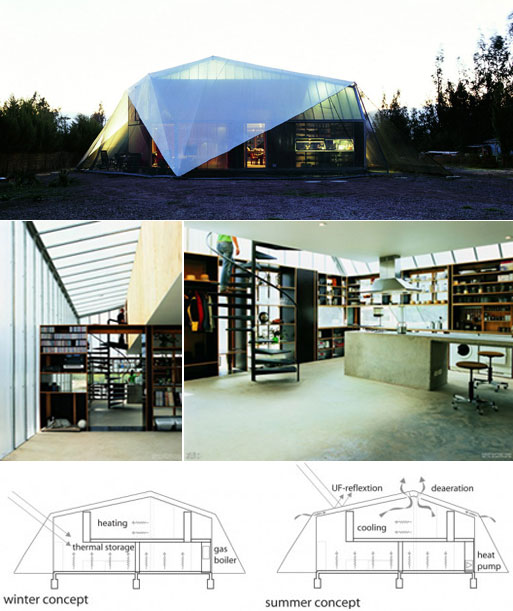
(Your) Wall House / FAR frohn&rojas

Check it out, the innovative Wall House has drawing kits available for purchase.

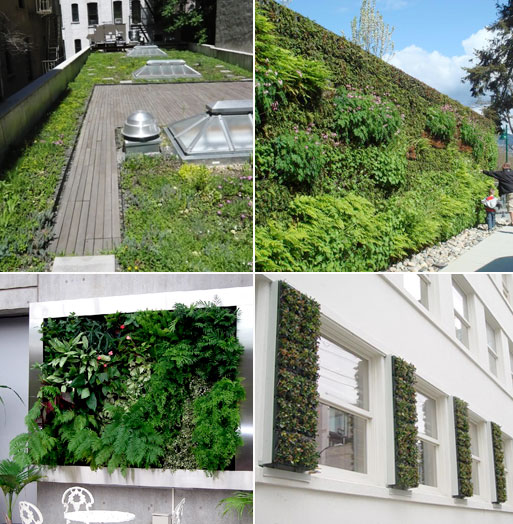
Both an environmentally sensitive and spatially intriguing house, the Wall House breaks down the idea of the “traditional” exterior wall of a house and instead plays with new material layers to create dramatically differing aesthetic, sensorial and climate-based experiences within the house. Through the juxtaposition of these layers –folded exterior sheets of high-performance gauze-like netting (“Soft Skin”), an insulating translucent climate barrier of polycarbonate panels (“Milky Shell”), a rigid stacked wood truss structural system doubling as exposed shelving and storage (“Stacked Shelving”), and an inner nucleus of exposed concrete (“Concrete Cave”)– multiple views and relations to the surrounding nature, light, temperature and domestic objects are pleasantly experienced from both inside and outside the house.

  • Schematic Drawing Set: Schematic drawing set of the Wall House project, including the right to use the plans to construct a single unit. EUR $1.499 – USD$ 2.335.
  • Detailed Drawing Set: Detailed drawing set of the Wall House project, including the right to use the plans to construct a single unit. EUR $4.999 – USD$7.788.
  • Detailed Drawing Set w/ Custom Climate Concept: Detailed drawing set of the Wall House project together with climate simulation for the location of your choice with recommendations and custom material specifications. The set also includes the right to use the plans to construct a single unit. EUR $7.999,00 – USD$12.462

FAR frohn&rojas website

[via Arch Daily]

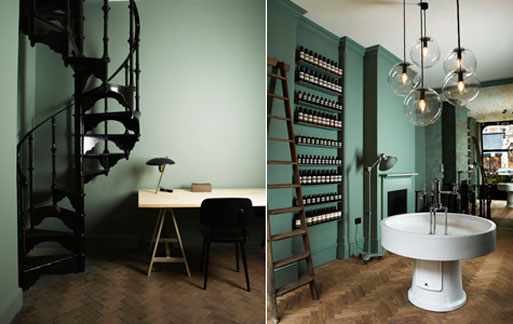
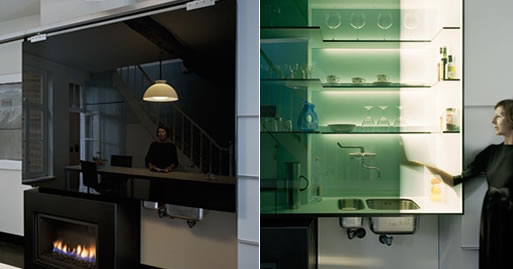
Aesop store by Stuido Ilse

Check out this interior of the first London outlet of Aesop designed by Studio Ilse. Despite the weird-ish green walls, I’m really liking the clean antique/apothecary feel. There’s also an amazing mirrored cabinet (not pictured) that I might want very badly.

[via dezeen]

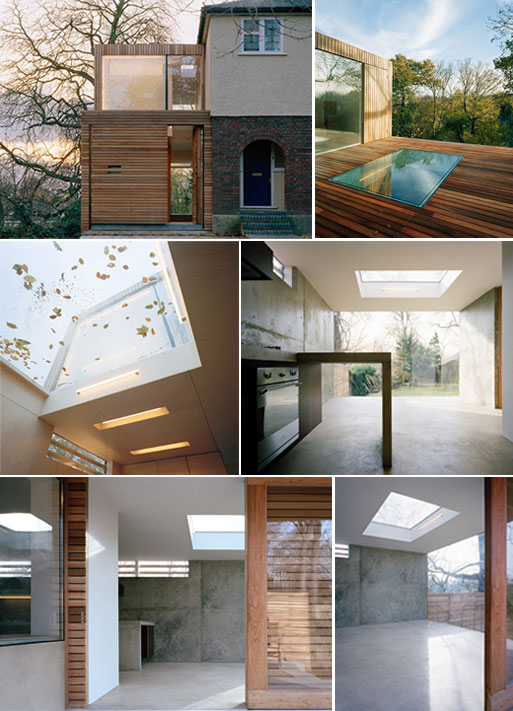
The Slat House

Check out the massive skylight/window and polished concrete surface…I’d move in there, no questions asked.

“Extension of a small semi-detached family home on a large plot in Blackheath. The modular timber extension wraps around the side of the semi-detached house; it peeps through the adjacent trees of the rear garden and provides access onto the side terrace.

The extension provides a fourth bedroom and second bathroom on the first floor. The ground floor has been dramatically reorganised providing a new playroom and a library for the client’s extensive collection of books and fine art prints. The kitchen and dining area is re-housed in the extension and benefits from unobstructed views of the garden. The interiors are fitted with bespoke furniture and storage space designed by Turner Castle.”

[via below the clouds]

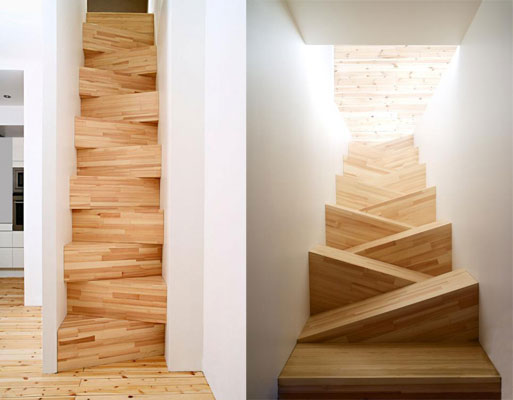
Steps of TAF Arkitektkontor

Check out these crazy and oh-so-vertical stairs by TAF Arkitektkontor.

[via below the clouds]

2modern Design Directory

2modern, one of our sponsors, has just launched
their new Design Directory. It wouldn’t hurt to take a look and see who’s listed in your area (or, if you are an architect or designer, maybe get listed yourself).

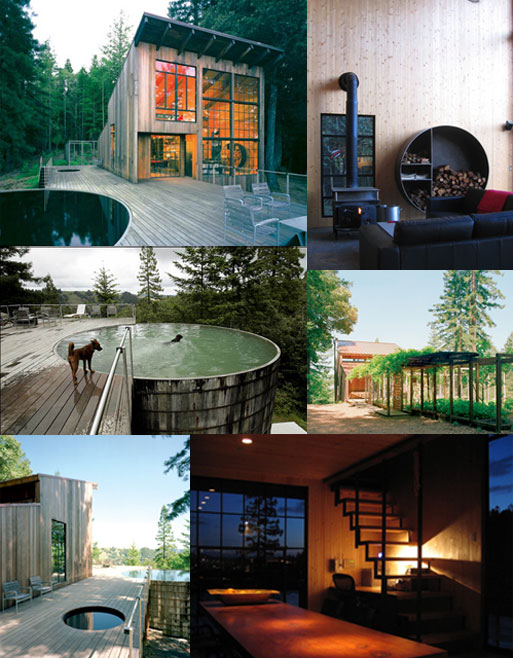
strata arkitektur (naturreservat)

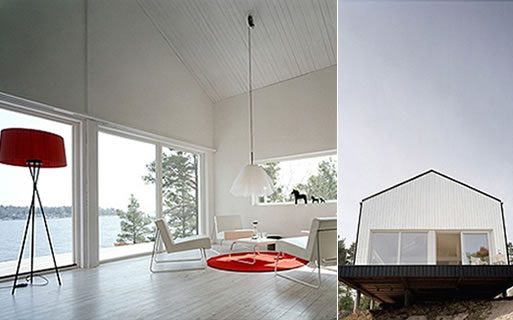
Wow…if this is indeed a forest superintendent’s cabin, I might rethink my day job.

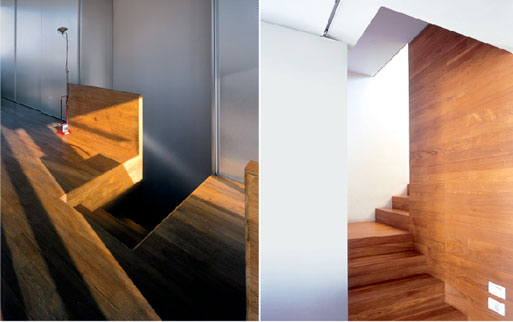
Jordivayreda- Staircases

Here’s a couple of interesting staircases by Jordivayreda Project Team.

[via Blue Ant Studio]

Casa Dejardin Hendric

I don’t know anything about this home other than it’s super modern and simple. Especially interesting to see the assembly/building photos…and take a look at the staircase- it’s one whole unit (you can see it in the pre-paint stage in the assembly photos).

Update: Thanks Katelijne for emailing a link to Belgian architect Pierre Hebbelinck’s site where there are more photos and information.

[via notcot]

Woo Loft, New York

I saw this quite a while back in dwell magazine (as I’m sure some of you did too) and it remains one of the more ingenious solutions for a sleeping area in small spaces.

“Having decided to site the new loft bedroom directly above the kitchen, the architects met the challenge of stacking two rooms, each with a seven-foot ceiling height, in only 12 feet of vertical space by creating two interlocking puzzle pieces: The mattress in the bedroom sits directly atop the ultra-thin kitchen ceiling (which enables a full-height space downstairs), and the floor area around the mattress is two feet lower than the platform on which it sits (thereby creating a full-height circulation area up above).”

[via dwell.com]

Klein Bottle House

This is a crazy house, and I mean that in a good way. The whole black/cream/red/orange color palette is so very suitable to the sharp angles, and I think it’s pretty fascinating how the idea of the Klein Bottle was the base from which the structure evolved.

“This holiday house is situated on the Mornington Peninsula 1.5 hrs drive from Melbourne. It is located within the tee–tree on the sand dunes, a short distance from the wild 16th beach. From the outset MCR wanted a building that nestled within the tree line. That talked about journey and the playfulness of holiday time. What began as a spiral or shell like building developed into a more complex spiral, the Klein bottle. MCR were keen to be topologically true to the Klein bottle but it had to function as a home. We thought an origami version of the bottle would be achievable and hold some ironic fascination.”

[text and images via materialicio.us]

decor8 ‘rooms I *heart*’

If you’ve not visited decor8, just a warning: the collection of room photos she has on flickr is completely addictive.

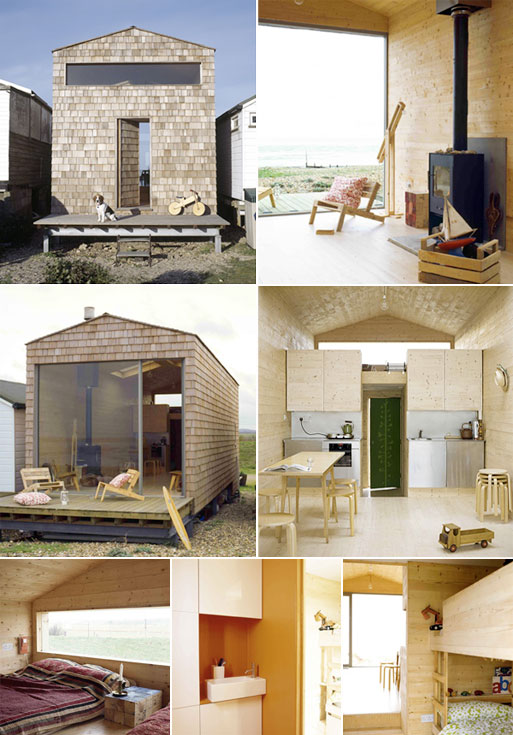
Sunset Cabin by Taylor_Smith Architects

Of course the fascination with smaller homes and get-aways continues, mostly due to architects creating cabins just like this. The first sentence quoted below leaves me terribly excited about the future.

“It is a one-room (190 square feet in size), self-contained box that was built by furniture craftsmen in four weeks in a Toronto parking lot and installed on site in 10 days.
Three of the exterior walls are floor-to-ceiling glass and of those, two are encased in horizontal cedar-screens for privacy, shade and light effects inside. One of the cedar screens has a large opening providing a direct view of the sunset from the built-in bed. The rest of the screen has random smaller gaps to allow various vignettes of the surrounding nature and to create fantastic light patterns inside. The slats are positioned so that there is no direct view in from the outside, but at the same time, it the inside feels almost wall-less.”

[image and quoted text via thecoolhunter]

Room Planner

One of our readers, Ryan, dropped us an email to let us know about this online room planner. It’s pretty easy to use and can get kind of addictive if you’re into rearranging furniture, but it will save you tons of backbreaking time moving around heavy sofas and cabinets.

Thanks Ryan!

More information:

View Room Planner here

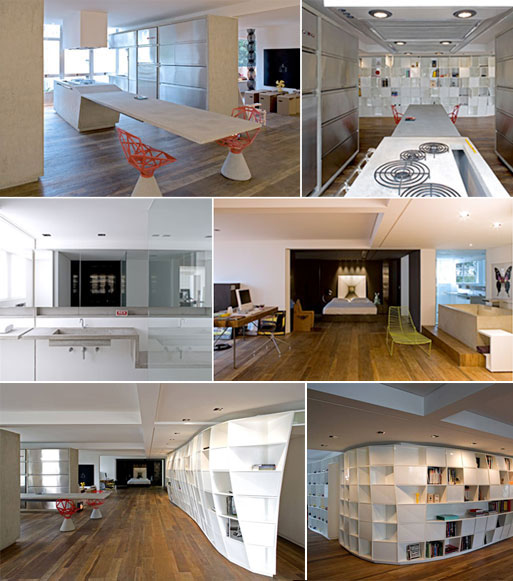
Sayama Flats by Schemata Architecture Office

Looking through Dezeen I came across the
Sayama Flats by Schemata Architecture Office. Seeing these photos prompt the discussion of what’s actually necessary to renovate. With the influx of new products, we’re all probably guilty in some way or another of consumerism, itching to rip out the old-but-perfectly-functional sink so that the shiny new one can take its place.

I’ll be the first to admit I constantly want to remake my own home, but there’s something about these photos that pull charm from some decidedly not-cool kitchen units, and I suppose it’s more about a space in flux and the possibilities that exist…whatever it is, it works for me. The super shiny polished floors don’t hurt either. (And, what the heck is up that light fixture over the bed? I want to know who makes it and how much it is.)

“The architects, headed by Jo Nagasaka, partially stripped the flats back to their concrete shell, altering selected elements such as windows, doorways and partitions while leaving some parts such as the kitchen units untouched.” -Dezeen

“In general, Japanese renovation projects are started from removing every old interior and then redesigned it. However, in this project we started to choose what is necessary and what is not from an existing interior space. Because of remaining some of the elements of the interior, we achieved to design a neutral space that motivates young people to create their own life-style.”-Nagasaka (via Dezeen)

[posted by katie]